A Country Full of Breakup Songs: Korean Popular Music Before K-pop
From the Ballads, Folk, and Rock of the 1980s and 1990s to Today’s Singer-Songwriters
If K-pop was your way into Korean music, it is worth listening to the slower songs behind the stage as well. Korean popular music has many songs about ended love, feelings that never quite reached someone, and longing that stays while life moves on.
Voices Before the Stage
K-pop is the easiest doorway into Korean music. Fast beats, precise choreography, dazzling visuals, polished style: this is how many people picture Korean popular music today.
But that alone cannot tell the whole story of Korean music. Before K-pop became widely known around the world, people in Korea were already making and listening to songs. On television and radio, at university festivals and in small venues, some sang bright, energetic songs while others sang of the quietest feelings.
Some of those songs have been loved with unusual staying power: breakup songs and songs of jjak-sarang (짝사랑), or one-sided love. Some sing of a love that has ended; others, of feelings that never reached the other person. The forms of love differ, but they are alike in the way the heart lingers. This is also why so many Korean love songs spend more time looking at the space love leaves behind than at the moment love comes true.
What Remains After Love Has Passed
A breakup means a love that has already ended. Jjak-sarang is a love that never began or never reached the other person. They may not know about those feelings, or they may know without feeling the same way.
In songs, the two emotions often share a similar texture. What remains are words that could not be said, answers that never came, and feelings understood too late. The relationship has ended or never begun, but the heart does not sort itself out at once.
Korean ballads and folk music have long been comfortable dwelling on what remains. They did not treat love as merely an episode of romance. They also made room for time gone by, feelings left unsaid, and self-reflection.
From Student Songs to the Age of the Ballad
This article looks mainly at Korean popular music of the 1980s and 1990s. The story could reach farther back, but this period produced many songs that are still heard often at karaoke and on the radio.
From the late 1970s, stages where university students performed songs they had written themselves became popular. The College Music Festival and the Riverside Song Festival were leading examples. Young musicians used those stages to sing, in their own words, about love and parting, dreams and the mood of their times. Even before K-pop, young people in Korea were already making songs in voices of their own.
From the late 1980s, the ballad became one of the main currents of Korean popular music. In Korea, the word usually brings to mind a slow love song. The voice is at the center, the lyrics come through clearly, and the emotion deepens gradually. It was an ideal form for songs of breakup and one-sided love.
Of course, Korean music in the 1990s was not all ballads. Dance music grew, while rock and hip-hop gained an increasingly visible presence. Yet songs that quietly looked inward were not easily pushed aside. Even when faster music was in fashion, listeners lingered with slower songs.
The Longing That Came Before the Songs
The Korean-language sensibility for speaking about parting and longing did not begin with popular music. Korean literature had long carried words for separation and waiting. Poets such as Kim Sowol and Han Yong-un are often remembered for giving separation and longing deep expression through the rhythms of Korean.
It is also worth noting that several of Kim Sowol’s poems were set to popular music. His poetry often uses short, repeated rhythms. Even on the page, there are moments when it sounds like song. That is part of why the sensibility of Korean poetry could meet popular music so naturally.
That does not mean the abundance of breakup songs in Korean ballads can be explained by modern poets alone. That would be far too simple. Still, there had long been subtle ways of speaking in Korean about separation, longing, and love that never came to be, and popular music carried that sensibility forward in another form.
Listening to Heung and Han Together
Two words often appear in conversations about Korean music. One is heung (흥), and the other is han (한). Heung is close to a feeling of shared joy and exhilaration spilling out through the body. It is the impulse that makes your shoulders move when a song begins and makes you want to laugh with other people.
Han is harder to define. It brings together wounds carried for a long time, unresolved sorrow, a sense of wrong that could not be voiced, and longing. It is also a word with a distinctly dark cast.
Yet to understand han only as a dark and despairing feeling is to see only half of it. Han also contains the desire to loosen what has become knotted inside. It is not about forgetting, but about moving through it little by little by speaking, singing, and sometimes laughing.
Korean breakup songs resemble this. They do not hide sadness or treat feelings that never reached someone as shameful. But neither do they keep people trapped inside those emotions. A good song lets sorrow be spoken and leaves room to walk forward again.
Ballads That Sound Like a City at Night
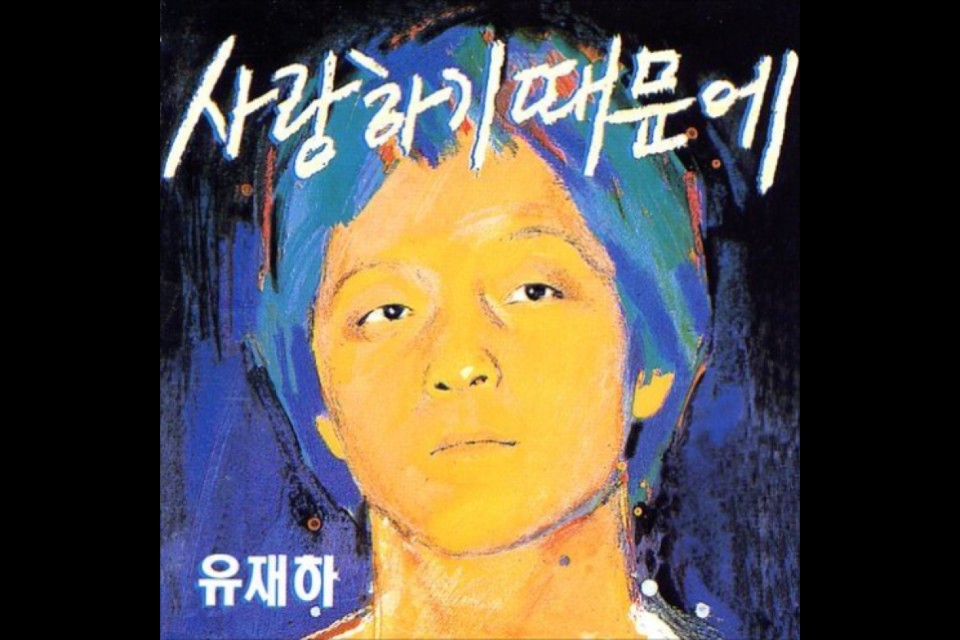
No discussion of Korean ballads in the 1980s would be complete without Yoo Jae-ha. His career was very short, but he left a deep imprint on Korean ballads and singer-songwriter music. His songs showed that sorrowful love could be expressed through sophisticated composition and a quiet voice.
The Yoo Jae-ha Music Contest, named after him, also holds an important place in the history of Korean popular music. It went on to become a gateway for many singer-songwriters. Its alumni include Bang Si-hyuk, You Hee-yeol, Kim Yeon-woo, and Sweet Sorrow. Bang later became widely known as the producer behind BTS.
Lee Moon-sae is another defining voice of the era. The songs he made with composer Lee Young-hoon are remembered in particular as urbane, polished ballads. Listening to Lee Moon-sae brings everyday scenes to mind before grand events: streets, seasons, an old love, and time gone by follow naturally.
In the songs of Yoo Jae-ha and Lee Moon-sae, sadness rarely cries out; it sits alone and thinks quietly. The days that remain after love ends feel more vivid than the fact of the ending itself. That is why these older songs still do not feel unfamiliar to listeners today.
A Lyricism That Is Not Always Quiet
Korean popular music of the 1980s and 1990s cannot be explained through ballads alone. It also held the heat of rock and the plainspoken language of folk.
Deulgukhwa is a band that brings that heat to mind. Its songs lean less toward quietly enduring sadness than toward walking forward. In the music, you can hear the desire to break through stifling times and to shout out loud together.
Kim Kwang-seok has remained with listeners in a different way. He was a singer who showed the power of folk music and words. Listening to his songs can feel as though someone beside you is quietly beginning to tell their own story. The warmth of his voice and words reaches you before any ornate sound.
Lee So-ra is another voice that cannot be overlooked. She does not express the feelings left after love ends only through loud sobs. She sings with a low voice, a slight tremor, and emotions that linger. It feels closer to a mind thinking alone for a long time than to sadness bursting outward.
Taken together, these names reveal a broader lyricism in Korean popular music. It is not made of sadness alone. There is heat, composure, and the strength to endure in a low voice.
The Feeling Lives On in Music Today
This sensibility did not remain in the past. Korea still has many musicians who draw out the emotional textures of the Korean language. They may not be as widely known as world-famous K-pop idols. Yet to many listeners in Korea, their voices feel close and familiar.
Choi Yu Ree’s “Forest” (숲) is worth hearing as a song of quiet comfort. It carries the feeling of a wounded heart that wants to lean on someone while also wanting to become shade for them. Rather than comforting with grand words, it feels like a song that simply sits down beside you.
HANRORO’s “Landing in Love” (사랑하게 될 거야) also fits the path this article has followed. Its Korean title—literally, “You Will Come to Love”—points toward the future. It raises the possibility that, despite past hurt and lingering unease, one might someday come to love again.
Lee Seung Yoon’s “Anthems of Defiance” (역성) moves in a fiercer direction. The song does not stop at quietly enduring sadness. It carries the energy of rock that refuses resignation and pushes forward.
The three artists sound very different. Choi Yu Ree offers quiet comfort, HANRORO asks us to imagine love after hurt, and Lee Seung Yoon cries out in the face of unsettled times. Yet they share one thing: all three draw the shape of feeling in fine detail through the Korean language.
When the Lyrics Begin to Come Through
K-pop is a wonderful doorway into Korean music. Beyond that door are many more rooms: the ballads, folk, and rock of the 1980s and 1990s, and the singer-songwriters of today. These are voices that linger without a spectacular stage.
The abundance of breakup songs does not mean Korean music is only sad. Nor does the abundance of songs about one-sided love mean people in Korea see love only as tragedy. It may be closer to the opposite. Many Korean songs do not avoid sadness. They look at it, speak it, and sing it, moving forward little by little.
You can listen to music without understanding every lyric. But when the meaning of a single sentence reaches your ear one day, the song suddenly feels closer. If K-pop was your first encounter with Korean music, it is worth listening now to how the Korean language gives voice to love that misses its timing and to longing. These songs may begin to sound not like simple sad songs, but like records of feelings that linger.
- Park Hanbin