Crimson Desert Hits 6 Million: Has Korean Gaming Really Changed?
From an Era of Monetization Controversies to Dave the Diver, Lies of P, Stellar Blade, and Crimson Desert
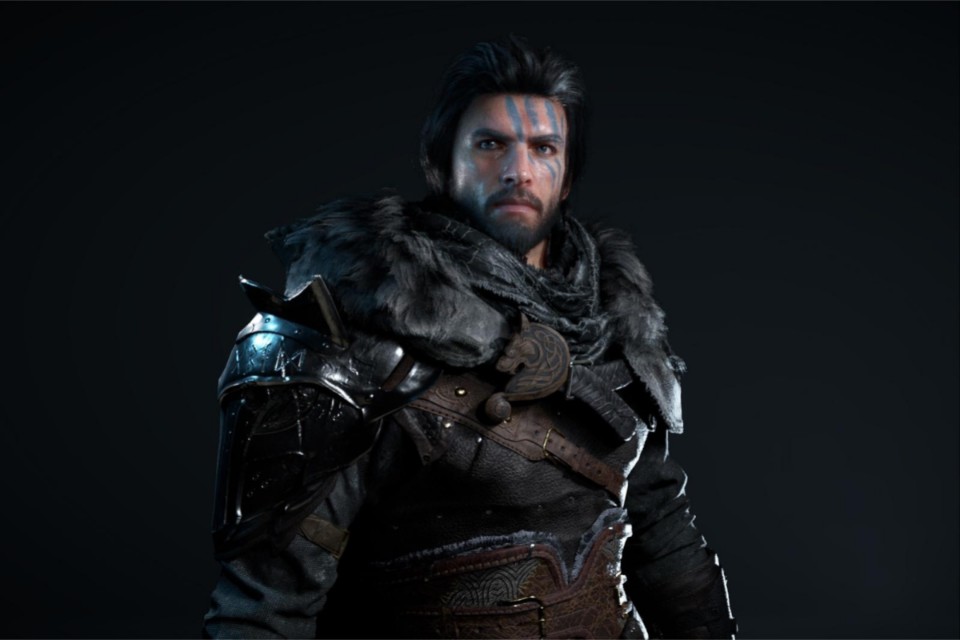
Korean games were once often associated with heavy in-game spending. Now titles like Dave the Diver, Lies of P, Stellar Blade, and Crimson Desert are drawing attention worldwide. Is Korean gaming really moving beyond monetization-driven formulas and toward stronger creative works?
What Comes to Mind When You Think of Korean Games?
What comes to mind first when you think of Korean games? Some people may think of Lineage, largely because the image of needing a great deal of time and money to build a powerful character has lingered for so long. Others may think of MapleStory. It is remembered for its cute characters and nostalgia, but also for controversies over randomized items.
These days, other names come up more often: Dave the Diver, Lies of P, Stellar Blade, and Crimson Desert. All were made in Korea, yet they leave a somewhat different impression from Korean games of the past.
For a long time, discussions of Korean games often began with the question, “How much money can this make?” Recent successes raise another question. Rather than asking how long a game can hold on to players, the question is whether they can enjoy it all the way through.
To answer that question, we need to trace the history of Korean games in chronological order. Let us begin with the era of PC bangs and online games.
Online Games That Grew Up in PC Bangs
The story goes back to the late 1990s.
It is difficult to discuss the Korean game industry without mentioning the PC bang (PC방). A PC bang is a place where people pay to use computers. In Korea, it was more than a simple internet café. It also became a familiar cultural space where friends played games, ate food, and spent time together.
From the late 1990s to the early 2000s, high-speed internet and PC bang culture spread rapidly across Korea. This was an ideal environment for online games to grow. Large numbers of people could log in at the same time, meet inside the same world, and fight together or compete against one another.
Early landmark titles included The Kingdom of the Winds and Lineage. The Kingdom of the Winds officially launched in 1996 as Nexon’s first game. Lineage began service in 1998 and went on to become an essential reference point in any discussion of Korean MMORPGs.
An MMORPG is a game in which many people enter the same online world to develop characters and go on adventures. Rather than a game that one person simply finishes alone, it is closer to a long-running experience built around relationships with other players.
During this period, Korean game companies gained experience in running stable servers, releasing updates quickly, and managing player communities. Korean games became particularly strong at creating online worlds and keeping them active over long periods.
That strength later led in another direction as well. Structures designed to keep players around, keep them logging in, and keep them paying gradually gained ground.
The Upsides and Downsides of Free-to-Play Games
Another change arrived in the 2000s: the free-to-play model.
Under this model, players can begin a game for free but pay for certain items or features. At first, the advantages were considerable. Players did not have to spend a large amount upfront to buy a game, and students could begin playing without much financial pressure. Companies could also earn revenue while operating a game over a long period.
Games such as MapleStory attracted large audiences through this model. Items that dressed up a character or made the game a little more convenient could also add to the fun. Not every paid item was a problem. Companies needed revenue to keep games running as well.
The problem emerged over time. In some games, the feeling shifted from “spending money makes things a little more convenient” to “it is difficult to enjoy the game properly without spending money.”
In Korea, spending money inside a game is commonly called gwageum (과금), or in-game spending. There is nothing inherently wrong with it. But when monetization comes before fun, the issue changes. The moment players begin to wonder, “Was this game made to entertain me, or to keep making me spend money?” their trust in the company starts to weaken.
Mobile Games and the Lineage-Like Formula
Smartphone games grew rapidly during the 2010s. Games were no longer something people played only at a PC bang or at a computer at home. They could now be played on the subway, in bed, or during a break.
Platforms such as KakaoTalk brought mobile games into the daily lives of many more people. Major companies including Netmarble, Nexon, and NCSOFT generated substantial revenue in the mobile market. The Korean game industry also grew in scale.
At the same time, a similar formula for success became firmly established. Many games combined progression systems focused on making characters stronger, player groups such as guilds or clans, competition with other players, and heavy in-game spending.
A term often used to describe this trend is Lineage-like. As the name suggests, it refers to games with structures similar to Lineage. They typically combine intense competition, character progression, guild battles, and heavy monetization.
These games made a great deal of money. Players, however, grew increasingly tired of them. Too often, starting a new game meant eventually encountering the same structure they had already experienced before.
The problem was not mobile games themselves. Mobile games can be excellent games. The problem was the tendency to repeat structures that were already profitable instead of searching for new kinds of fun.
How Randomized Items Eroded Trust
As free-to-play and mobile games grew, randomized items became one of the biggest controversies in Korean gaming.
Randomized items, often called loot boxes in English, are products that players buy with money even though chance determines what they receive. They may get a valuable item, or they may get something they did not want. Players are encouraged to think, “Maybe I will get something good this time.” For that reason, many people came to view randomized items not simply as products, but as systems that create a gambling-like sense of tension.
The larger issue was disclosure. Doubts grew over whether players knew the exact odds before spending money and whether game companies properly announced important changes to those odds. When probabilities were not clearly disclosed, or players felt that changes had not been adequately explained, frustration was inevitable.
Since March 22, 2024, South Korea has required games to disclose information about randomized items. In principle, games that offer them must display the odds and present the relevant information in a form that players can easily understand.
The randomized-item controversy surrounding MapleStory also dealt a major blow to player trust. In 2024, the Korea Fair Trade Commission issued Nexon Korea a corrective order and a penalty of about 11.6 billion won, saying the company had failed to properly disclose changes to the odds of randomized items in MapleStory and Bubble Fighter.
The episode left many players with one question: Are game companies truly honest with them? Technical skill alone is not enough for the Korean game industry to earn a better reputation. It also needs systems that players can trust.
Another Path Opens in the Global Market
Of course, Korean companies did not make only games centered on in-game spending. From the late 2010s, clear examples began to show that Korean games could also succeed in the global market.
PUBG: Battlegrounds greatly expanded the global possibilities for Korean games. It recorded strong sales on PC and consoles and helped the battle royale genre spread worldwide. Lost Ark also deserves mention. After its global launch, it drew large numbers of players around the world in a short period, demonstrating that a Korean MMORPG could compete internationally.
These successes were undoubtedly meaningful. Still, they were closer to examples that highlighted Korea’s strengths in online operation and live services. From 2023 onward, a somewhat different kind of success began to emerge. Terms such as premium games, single-player, consoles, Steam, and creative quality appeared more often alongside Korean games.
A premium game is generally one that players purchase upfront and then play. Single-player refers to a game designed to be played alone. In these games, the more important measure is not how effectively they keep asking players to spend, but whether they offer a polished experience from beginning to end.
Dave the Diver, Lies of P, and Stellar Blade
Since 2023, several titles have gradually changed how people view Korean games. In order of release, Dave the Diver, Lies of P, and Stellar Blade come to mind first.
Dave the Diver is not about a vast war or a dark world. During the day, the player dives into the sea to catch fish. At night, they run a sushi restaurant. The combination may sound a little unusual, but that was exactly what made it feel fresh.
The marine adventure game was developed by Mintrocket. In November 2024, it surpassed 5 million copies sold. The success of Dave the Diver showed that large budgets and spectacular graphics are not the only answer. A small, original idea could also win over players around the world.
Lies of P represented a different kind of success. The action RPG reimagines the story of Pinocchio in a dark and unfamiliar world. In 2026, combined global sales of the main game and its DLC surpassed 4 million copies.
It is also worth briefly explaining the term soulslike. Soulslikes are a genre known for difficult combat, powerful bosses, precise controls, and repeated challenges. Players fail many times, learn how enemies move, and feel a strong sense of achievement when they finally win.
Lies of P helped establish the idea that Korean developers could also make polished single-player action games. It challenged the belief that Korean games were strong only in online and mobile gaming.
Stellar Blade demonstrated the potential of a AAA-scale action game from a Korean studio. A AAA game generally refers to a large production made with a major budget and a large team. But AAA does not automatically mean a game is good. What matters more is how successfully that budget and workforce are turned into compelling gameplay.
As of June 2025, Stellar Blade had surpassed 3 million copies sold worldwide across all platforms. The milestone signaled that a console-focused action game from a Korean developer could attract attention in the global market.
The three games are very different. Dave the Diver is small and original, Lies of P is a dark and finely crafted action RPG, and Stellar Blade is a large-scale action adventure. Yet they have one clear point in common: rather than asking players to keep paying more, they set out to make games worth enjoying all the way to the end.
What Crimson Desert’s 6 Million Copies Mean
Then, in 2026, Crimson Desert drew major attention.
Crimson Desert is an open-world action-adventure game developed by Pearl Abyss. An open world is a game format that allows players to roam freely across a large environment. The game is notable because a Korean company achieved global success with a major production aimed at PC and console players.
On June 11, 2026, Pearl Abyss announced that Crimson Desert had reached 6 million copies sold worldwide. It achieved the milestone 83 days after release. The game had already drawn attention by passing 5 million copies just 26 days after launch.
The figure leaves the Korean game industry with a weighty question. Can a major Korean game company succeed globally with a large-scale premium game rather than a heavily monetized mobile title?
Of course, the success of a single game is not enough to say that the entire industry has changed. The Korean game market is still centered on mobile games. According to reporting on South Korea’s 2025 game industry white paper, the domestic game industry generated 23.8515 trillion won in revenue in 2024. Mobile games accounted for 59.0 percent of that total, while console games made up 5.0 percent.
The current shift, then, is closer to a change that has begun than one that is complete. The Korean game industry still relies heavily on mobile games and live services. At the same time, meaningful success stories are becoming more common across PC, console, and premium games. The two currents now coexist within the same industry.
Turning to Korean Places and Stories
Another notable direction for Korean games is worldbuilding rooted in Korea. Developers are increasingly drawing on Korean history, places, stories, and imagination as material for games.
Pearl Abyss’s DokeV takes its name from the dokkaebi (도깨비) of Korean folklore. Dokkaebi are often portrayed not simply as frightening spirits, but as playful and mysterious beings. DokeV brings that traditional name into a modern open-world game.
Nexon’s NAKWON: LAST PARADISE is also intriguing. Nakwon (낙원) means an ideal place without worry or pain. Yet the game is set in a Korean city after a zombie outbreak. Its locations evoke the area around Nakwon Arcade in Jongno, Seoul. Because the name of a real place also means “paradise,” the premise of searching for safety in a ruined world takes on an ironic edge.
Nexon Games’ Woochi the Wayfarer is a Joseon-era fantasy action game inspired by the classic Korean novel The Tale of Jeon Woochi. Jeon Woochi is a familiar figure in Korean storytelling, known for wielding Taoist magic. In 2009, the film Jeon Woochi: The Taoist Wizard reimagined him as a modern fantasy character.
Krafton’s Project Windless is based on Lee Yeongdo’s fantasy novel The Bird That Drinks Tears. It offers a glimpse of how Korean literature might expand into a major game production.
Not all of these projects have proved themselves yet. Some have not been released, while others remain in development. Even so, the direction is worth watching. The streets of Seoul, the atmosphere of the Joseon era, dokkaebi, Jeon Woochi, and Korean fantasy literature are all becoming material for games. The trend suggests that Korean developers are moving beyond familiar formulas for success and looking for places and stories of their own.
In the End, Trust Is What Matters
The Korean game industry grew rapidly. It became skilled at making online games and earned substantial revenue in the mobile market. It also developed strong capabilities in running servers, retaining players, and continually updating content.
But along the way, it also lost player trust. Excessive in-game spending, randomized items, and similar game structures left many players exhausted. When a game feels less like enjoyable play and more like a device designed to prompt payment, it becomes difficult for players to trust the company behind it.
That is also why the recent changes are encouraging. Games such as Dave the Diver, Lies of P, Stellar Blade, and Crimson Desert show that Korean gaming can take another path. There is still a long way to go, of course. The entire industry has not changed overnight, heavily monetized mobile games remain a major market, and the problems surrounding randomized items have not completely disappeared.
Even so, the questions are slowly changing. In the past, “How much money can this game make?” often came first. Now, more people are also asking, “Is it worth playing to the end?” and “Will it be remembered for years?”
Making money matters too. Games are an industry, after all. But creating a game that people remember for years is more difficult, and that makes it more valuable. The future of Korean games will ultimately depend on how sincerely the industry answers that difficult question.
- Park Hanbin