Even With Son Heung-min, Why Are South Korean Football Fans Angry?
South Korea has more star players than ever, but many fans are still waiting for football they can trust.
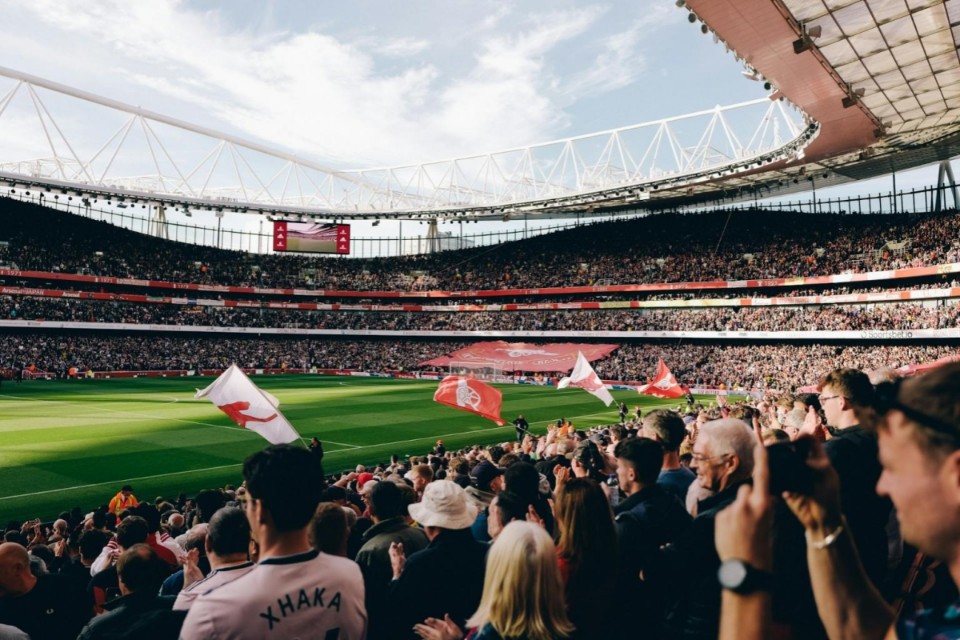
Son Heung-min, Kim Min-jae, Lee Kang-in, Hwang Hee-chan. By the names alone, South Korean football looks more star-studded than ever. Yet fans are often far from cheerful. Their anger is not simply about losing. Long-held distrust is now surfacing in anger over the way coaches are appointed, disciplinary cases are handled, and controversies are explained.
The Unease of a Country That Keeps Qualifying for the World Cup
Anyone unfamiliar with South Korean football might find this puzzling. It has Son Heung-min, Kim Min-jae, Lee Kang-in, and Hwang Hee-chan. All have made names for themselves among football fans around the world. With a lineup like that, South Korean football might seem to be running quite well.
There are real achievements, too. South Korea qualified for the 2026 FIFA World Cup in North America, extending its streak to 11 consecutive tournaments. On days when the national team plays, people still turn on the television and follow the news. Plenty of supporters also keep going to K League stadiums.
Yet South Korean football fans often do not look particularly happy. They are not always angry because of results. A defeat is disappointing, but many fans can accept it if the team was well prepared and gave its best. The anger that lingers usually comes from somewhere else.
“Why was it decided this way again?” “Why did the explanation come so late?” “Why can’t we see who is taking responsibility?”
Pride and distrust now sit side by side in South Korean football. Fans are proud when they look at the players, but uneasy when they look at how the game is run. Not every fan feels the same way. Some place more weight on the national team’s results, while others point to the practical difficulties the football association faces. Even so, one sentiment has been heard often among fans in recent years: they love South Korean football, but find it difficult to trust.
What Son Heung-min’s Stardom Cannot Hide
Son Heung-min is a source of pride for South Korean football. The statement hardly seems to need a long explanation. He won the Golden Boot in England’s Premier League. The Premier League is one of the world’s most closely watched football leagues. For South Korean fans, winning its top scorer award meant more than a record.
For many South Korean fans, Son is the player who made them believe that a Korean footballer could reach the very top of the world game. Even people who rarely watch overseas football often know his name. The sight of him scoring a goal became both sports news and a source of pride for South Korean fans.
But Son’s brilliance does not mean that South Korean football as a whole is functioning well. One star can be a source of pride for a country, but he cannot tell the whole story of its football. A great player must also be supported by trustworthy coaches, fair administration, clear accountability, and a healthy league culture.
This is precisely where fans feel frustrated. Son became a global star, but many feel that the way South Korean football is run has not inspired the same degree of trust. Son’s career moved forward, but did the wider football landscape around him keep pace? Fans keep asking that question.
By the wider football landscape, fans do not mean only what happens on the pitch. It includes how coaches are appointed, who explains things when problems arise, and what accountability looks like when mistakes recur. When fans speak of the “system,” this is the structure they mean.
Fans Are Judging More Than the Scoreline
Defeat is unavoidable in football. Even the strongest teams can lose, and even the best players cannot win every tournament. Fans know that. If a team was well prepared and gave everything, many can accept a disappointing result.
The problem is a defeat that is difficult to make sense of. When preparation looks poor, explanations come late, and the same patterns repeat, the anger lasts. That is why South Korean football fans watch not only what happens in a match but also the process behind it.
The appointment of national team head coaches is a major example of how that distrust has grown. A head coach sets the direction of the national team. The selection process should, of course, be clear and fair. Yet after watching several appointments, many fans have been left thinking, “I still don’t understand why this person was chosen.”
The controversy eventually led to a government audit and a court ruling. South Korea’s Ministry of Culture, Sports and Tourism concluded that there were problems with the rules and procedures used by the Korea Football Association in appointing head coaches. The KFA countered that it had followed its regulations. A first-instance court ruling later followed, but the question that remained for fans was simpler than the legal language:
“So did the process really make sense?”
Football is not shaped by the 90 minutes on the pitch alone. Decisions made away from the pitch are part of a team as well. Fans are now asking how those decisions are made.
Why the KFA Keeps Coming Under Scrutiny
The Korea Football Association, or KFA, is the governing body responsible for running football in South Korea. The national team, coaching system, and many football policies are all connected to it. That is why, whenever something major happens in South Korean football, fans naturally turn their attention to the KFA.
Of course, the KFA cannot satisfy every fan. Hiring a head coach is not easy, and there are many practical constraints. Whatever choice it makes, some people will disagree. Fans are not expecting perfection, either.
They do, however, want to know the reasons. There should be an explanation of why that coach was chosen, what criteria were used to compare candidates, and who will take responsibility when something goes wrong. When explanations come late or fall short, fans are often more disappointed by the organization’s attitude than by the decision itself.
In South Korean society, fairness is a weighty word. At school, at work, and in politics, people care deeply about whether the same standards were applied to everyone. Sport is no different. The national team, in particular, feels like “our team” to many people, so it is held to a higher standard.
There is one situation fans especially dislike: major decisions appear to have already been settled at the top, while supporters hear only the outcome afterward. When this happens repeatedly, frustration no longer stops at one or two decisions. It grows into distrust of the organization as a whole.
Why the Pardon Controversy Still Lingers
It is hard to discuss distrust among South Korean football fans without mentioning the 2023 pardon controversy. Two terms matter here. A pardon means lifting or reducing a disciplinary punishment. Match-fixing is the deliberate attempt to alter a match’s outcome.
Match-fixing is one of the gravest offenses in sport. Sport rests on fair competition. Matches are compelling because people trust that players are competing honestly, referees are judging fairly, and no spectator knows the outcome in advance. Match-fixing destroys that trust.
In 2023, the KFA tried to pardon people in the football community who had been disciplined. Here, that broad category includes players, coaches, referees, and other football officials. The problem was that the list included people linked to past match-fixing.
Fans reacted strongly. The reason was simple: “Why should people who undermined the foundations of football be forgiven so easily?” The pardon was ultimately withdrawn, but by then it had already left a deep scar among fans.
The episode did not look like a simple administrative mistake. To many fans, it looked as though the football establishment was protecting its own. In Korean, there is an expression for this: je sikgu gamssagi (제 식구 감싸기), used when an organization goes too far in protecting its own members or close associates from the consequences of wrongdoing.
Of course, the question of whether people deserve a second chance is complicated. It is difficult to argue that every punishment should last forever. But when the offense is match-fixing, which strikes at the roots of sport, the standard must be much stricter. That is why the pardon controversy has stayed with fans for so long. They wanted to know whether the KFA truly understood the standards they expected it to meet.
Player Names Alone Do Not Make a Team
On paper, the current South Korean national team looks strong. It has players such as Son Heung-min, Kim Min-jae, Lee Kang-in, and Hwang Hee-chan. Expectations naturally rise when a major tournament begins.
But football is not played by names alone. Even a brilliant forward will struggle to create dangerous attacks if the team’s movement does not fit together. Even with an outstanding defender, a team can concede if its positioning and pressing break down. In the end, football requires individual ability and team structure to work together.
The Asian Cup held in 2024 brought this problem back to mind for many fans. Despite fielding a squad full of talented players, South Korea lost 2–0 to Jordan. More strikingly, the team did not record a single shot on target. A shot on target is directed inside the goal frame and either scores or forces the goalkeeper to make a save.
The shock was less about the defeat itself than the question, “How could a team with these players produce such a frustrating performance?” That question is not aimed only at one coach or one player. It also concerns how the national team is prepared, its long-term planning, tactical direction, and squad management.
South Korean football’s problem is no longer that it lacks players. Now that it has more talented players, the structure required to build a team stands out more clearly. Good ingredients do not automatically produce a good meal. Turning players’ talent into collective strength remains one of South Korean football’s central tasks.
Yet the Fans Have Not Left the Stadiums
South Korean football fans have not always been negative. South Korean football also holds memories of moments when everyone shared the same excitement. The 2002 World Cup is the biggest of them. South Korea reached the semifinals, and crowds dressed in red filled the streets. Football then was not simply a sport but a shared celebration.
The 2022 World Cup in Qatar is another treasured memory. South Korea beat Portugal and reached the round of 16. The sight of players embracing after the final whistle, the tension of waiting for the result of another match, and the roar when a place in the round of 16 was confirmed are still often remembered.
The K League’s recent momentum should not be overlooked, either. In the 2025 season, the league recorded its highest ticket revenue since official figures began in 2013. That suggests interest in South Korean football has not disappeared. Fans still go to stadiums, buy jerseys, and support their teams.
It would therefore be wrong to read fans’ anger as a sign that they dislike football. The opposite is closer to the truth. They keep following the game, feel disappointed more often, and demand more because they care. Without that love, they would not stay angry for so long.
South Korean Football Still Has a Chance
There is no need to be wholly pessimistic about South Korean football. It has players who have competed on the world stage, and the fans have not left. More people are also attending K League matches. South Korean football still holds an important place in Asia.
The question is how to protect that potential. Major decisions need to be more transparent. Whether appointing a coach, handling disciplinary action, or responding to controversy, officials need to offer explanations that fans can accept. Simply saying, “We’ll take care of it,” is not enough to win that trust back.
A culture of accountability is also needed. When something goes wrong and no one appears to take responsibility, distrust deepens. By contrast, if an organization admits mistakes and tries to correct them, trust can slowly return, even if it takes time.
There are also limits to football built around individual players alone. It is not enough to think everything will be fine because Son Heung-min is there, the team can hold on because Kim Min-jae is there, or things will eventually come together because Lee Kang-in is there. Strong teams are built when outstanding players are supported by a solid structure.
It also matters that young players grow up in a safe and fair environment. Youth football is a subject large enough to deserve a separate, in-depth article, so it will not be explored at length here. One thing is clear: the next Son Heung-min will not emerge by accident.
Son Heung-min is a source of pride for South Korean football. But his name alone cannot hide all of the game’s problems. South Korean football fans are angry not simply because the team has lost. They want more victories, but before that, they want football they can trust.
Perhaps the anger of South Korean football fans can be summed up like this:
“We have not given up on South Korean football. That is why we are still angry.”
- Park Hanbin