Gorani, the Vampire Deer That Jumps Out of Rice Fields
In Korea, the gorani is a wild animal and a familiar figure in road culture and internet memes.
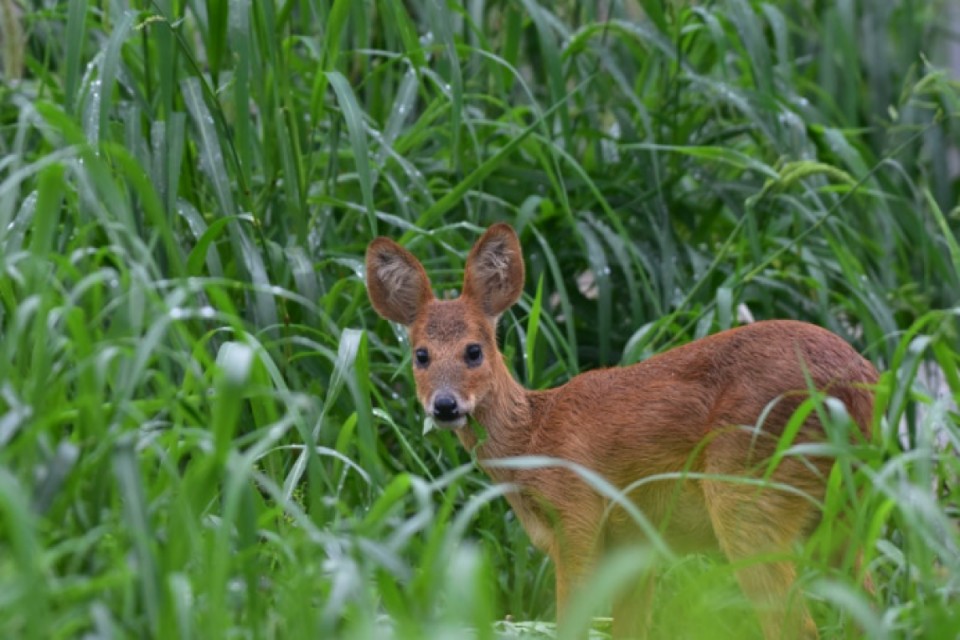
You are walking along a narrow ridge between rice paddies when a loud noise comes from the rice plants. A brown animal hidden among them suddenly leaps up and vanishes into another paddy in an instant. It is not a Pokémon. It is a gorani (고라니), a water deer you may occasionally encounter in the Korean countryside.
There Is No Battle Music in the Grass
Rural roads in Korea are usually quiet. The wind passes along the edge of the rice paddies, and farm machinery can be heard in the distance. In summer, pesticide-spraying drones sometimes fly low over the fields.
Then something suddenly springs out from among the rice plants. It is bigger than a small dog, yet it moves with a strange lightness. For a moment, it seems to rise into the air before racing across the paddy on long legs. The person is startled, and so is the gorani.
In a game, this would be the moment the screen shook and battle music kicked in. In real life, nothing starts. The gorani simply runs away.
Gorani are not animals you often see in the middle of Seoul. But travel just beyond the city, and the picture changes. Plenty of people have seen them near rice paddies, fields, rivers, and wooded hills. Stories of drivers breaking into a cold sweat when a gorani suddenly crosses the road are common too.
In Korea, the gorani is less a distant wild animal than a wild neighbor that occasionally wanders straight into people’s everyday surroundings. And in English, it is sometimes called something else.
Vampire deer.
A Water Deer with a Vampire’s Face
The usual English name for gorani is water deer. The name is quite literal. They are often found in waterside vegetation, reed beds, and areas around rice paddies and fields.
They look different from the deer many people picture. Deer usually bring large antlers to mind first, but gorani have no antlers. Instead, males grow long upper canine teeth. When these teeth protrude past their lips, they look like small blades.
That is how the nickname “vampire deer” arose. It does not mean they drink blood, of course. Gorani eat plants. The word “vampire” is little more than a joke about their long, visible canines.
But their teeth alone do not explain why gorani became so well known in Korea. More people have experienced one suddenly bursting into view than have seen its face up close. That sudden appearance is also central to the way the animal is remembered in Korean internet culture.
It appears out of nowhere. It runs in a baffling direction. Sometimes it makes a genuinely strange sound.
At Night, It Can Sound Like a Person
A gorani’s call is nothing like the cute sound people might imagine a deer making. It is often short and sharp. To some people, it sounds like a barking dog; to others, like a person screaming.
During the day, it may be easy to dismiss as merely an odd noise. At night, it feels different. Imagine sleeping in a house near the mountains when a sudden shriek comes from outside. Beyond the window, it is pitch dark, and no one is in sight. A horror film comes to mind before a cute wild animal does.
Stories like these often appear on the Korean internet. “At first, I thought someone was screaming.” “I froze because I thought it was a ghost.” “It turned out to be a gorani.” People tend to remember gorani for these encounters and their calls more than for pretty wildlife photos.
Gorani also appear often in stories about military service. Many military bases are close to mountains and fields, so soldiers standing guard at night sometimes hear their calls. The sound can be genuinely startling the first time. It may be frightening in the moment, but with time it becomes the kind of military story people tell over drinks.
And so the gorani has made its way into rural nights, military night watches, and internet jokes.
It Is Not Funny When You Meet One on the Road
In photos or videos, gorani can look comical and cute. Meeting one on the road is a different matter.
Gorani sometimes hide in vegetation and then suddenly run onto the road. Startled by headlights, they may bolt in an unexpected direction. For a driver, it is a frightening moment. The animal can be hurt, and so can people.
In Korea, collisions in which wild animals are struck and killed by vehicles are commonly called “roadkill.” The word comes from English, but it is used unchanged in everyday Korean. Gorani rarely go unmentioned when roadkill comes up in Korea.
The animal has also inspired new slang. Jarani (자라니) blends the Korean words for bicycle and gorani. Some drivers use it when a bicycle suddenly enters the road in a way that looks dangerous. Electric scooters inspired kickrani (킥라니). These days, runrani (런라니), a blend of runner and gorani, has also appeared.
They are all built on the same image: something suddenly darts out.
These terms should, of course, be used with care. They can become disparaging labels for everyone who cycles, rides an electric scooter, or runs. On the road, drivers, cyclists, and pedestrians all need to be careful.
Still, these coinages show what the gorani has come to represent in Korean. Gorani is no longer just the name of an animal. It has become a word that brings to mind something appearing at an unexpected moment.
Common in Korea Does Not Mean Common Everywhere
By this point, it may sound as though Korea has far too many gorani. Many people in Korea do see them that way. In rural areas, they are regarded as animals that eat crops, while on the road they are remembered for the accidents they can cause.
But open up a world map, and the story changes. Gorani are not animals found in just any country. They are native mainly to the Korean Peninsula and parts of China, and internationally they are sometimes classified as a “Vulnerable” species in need of protection.
In Korea, they are familiar enough to prompt the reaction, “Another gorani?” In other countries, a person may never see one in an entire lifetime. Common in Korea does not mean common everywhere in the world.
There is no need to read this article as a wildlife conservation campaign. Still, the reversal is worth remembering: an animal that feels utterly familiar to people in Korea can look quite special from outside the country.
Did It Survive Because It Tastes Bad?
When people in Korea hear that gorani are rare globally, they sometimes ask the same question.
So why are there so many in Korea?
Taken seriously, there are several possible reasons. There are places for them to live, they reproduce, and fewer predators may also have played a role. Online, however, a different answer tends to come first.
“Gorani survived because they taste bad.”
It is a joke rather than a fact. Still, it is easy to see how the line arose. Korea has a history of hunting and eating wild game. If gorani had tasted good, would so many have survived until now? That is the playful logic behind the joke.
Gorani meat is not widely eaten in Korea. Some say it has a strong smell, and there is also said to have been a folk belief that eating it brings bad luck. In Korean, a strong, unpleasant smell from meat or an animal is called norinnae (노린내) or nurinnae (누린내). Together, these associations helped the joke that gorani “survived because they taste bad” take hold.
Of course, people cannot simply hunt or eat wild animals as they please; doing so may be illegal. There are health and safety concerns as well. So this is not an invitation to eat gorani. It is closer to an internet-style joke that explains the strange gap between an animal sometimes classified internationally as Vulnerable and one that seems so common in Korea.
The Next Time You Hear a Rustle
Gorani are difficult to sum up in a single sentence. They have no antlers, but they do have fangs. They hide in vegetation and leap out like Pokémon. At night, their calls can sound human, and on the road, they startle drivers. Then they become internet memes.
In Korea, they are common enough to become the subject of jokes, but from a global perspective, they are not so common at all. This one animal somehow brings together rice paddies and fields, rural roads, military stories, road culture, and internet slang.
The next time you are walking along a rural road in Korea and hear a rustle in the grass, try not to be too startled. No battle music will play.
It is probably a gorani.
A wild neighbor in Korea with a habit of startling people.
- Park Hanbin