How Did Cheap Green-Bottle Liquor Become “Soju”?
How traditional distilled soju came to be remembered as green-bottle liquor.
Order soju at a Korean restaurant and a green bottle will usually appear. But long ago, soju was not that kind of drink. How did a liquor once made as a cheap imitation of traditional soju come to define what the word “soju” means?
The Green Bottle We Picture When We Think of Soju
At a Korean restaurant, ask for “a bottle of soju,” and what usually arrives is a small green bottle. It is the bottle lined up in the refrigerators at Korean barbecue restaurants, easy to spot on convenience-store shelves, and tipped back by a drama character at the end of a difficult day. Outside Korea, too, soju is usually remembered in this green-bottle form.
Cold, cheap, slightly sweet, and easy to get drunk on. That image leads many people to assume soju has always been this kind of drink. But was the soju Koreans drank long ago really the same as today’s green-bottle version?
First, one point should be clear: under Korean law today, green-bottle soju is soju. Both spirits distilled from a fermented drink and spirits made by diluting neutral spirit or neutral grain spirit with water are legally classified as soju. Here, neutral spirit simply means clean alcohol produced at a high proof. So it would be difficult to call today’s green-bottle products “fake soju” in any legal sense.
The question here is not a legal one. It is how closely the drink people once called soju resembles the one we see most often today. By the standards of tradition, the two are quite far apart.
Soju Was Originally a Spirit Shaped by Fire
The name soju carries an image of fire. It comes from a process that did not end with brewing: the finished drink was placed over fire once more.
This process is distillation. When a drink is heated, its alcohol turns to vapor first. Cooling that vapor produces a stronger spirit with more concentrated aromas. The method sounds familiar now, but distillation must have seemed quite unfamiliar long ago. To people then, it may have looked like setting a drink brewed from grain and nuruk, a Korean fermentation starter, over a fire to separate and collect the drink’s strength.
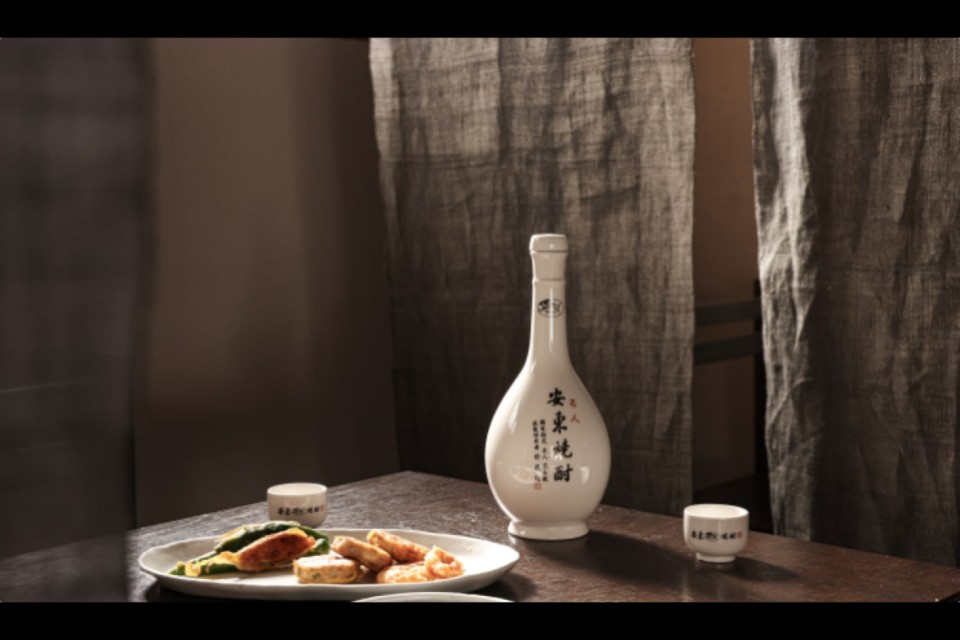
Traditional soju was made this way. First, grain and nuruk were fermented into an alcoholic drink; that drink was then distilled. Spirits whose names survive today, such as Andong soju, belong to this tradition.
This kind of soju could not be produced easily or in large quantities. It required plenty of ingredients and time, and distillation reduced the final volume. For these reasons, it was long considered precious. Records even describe it as a drink consumed by kings and scholar-officials, far removed from today’s green-bottle image.
If we remember soju only as the name of a cheap drink, we miss where it began. Soju was originally a distilled spirit that gathered the aroma of grain and the depth of fermentation through fire.
Finding a Cheaper Way to Make Soju
The problem was the price. Traditional soju was difficult and expensive to make, putting it beyond what many people could readily buy and drink. In the modern era, another method emerged: imported alcohol was mixed with traditional-style soju, then diluted with water.
Liquor made this way began to be sold around the end of the nineteenth century. As prices fell, demand grew. Later, the formula shifted toward mixing a small amount of traditional-style soju into inexpensive alcohol.
It is difficult to see this as the natural evolution of traditional soju. Rather than a spirit that gained flavor by fermenting grain and distilling it again, it was closer to an attempt to reproduce the taste and name of expensive soju at a lower price.
By the standards of the time, calling it a soju-like liquor—an imitation soju—would not have been far off. That does not mean today’s green-bottle products should be called fake in a legal sense. Alcohol classifications and production technology are different now. The key is the starting point: at first, there was a cheap drink made to stand in for traditional soju.
Over time, that drink moved into the very center of what the word soju meant.
The New Soju Built by Factories and Cities
Diluted soju is made by adding water to high-proof neutral spirit and adjusting the taste with sweeteners. Unlike traditional soju, it does not redistill a fermented drink in a way that preserves the aromas of its raw ingredients. In return, its flavor is easier to keep consistent, and it is well suited to large-scale factory production.
After a mechanized soju factory was established in Pyongyang in 1919, diluted soju moved into mass production. Traditional soju had been a drink of regions and households; diluted soju became a drink of factories and markets.
By the 1960s, the balance had tilted much further. Korea’s food supply was poor at the time. Rice was needed for meals, not alcohol. After the Grain Management Act took effect in 1965, production of traditional distilled soju made from grain fell sharply. In its place, diluted soju made with neutral spirit produced from sweet potatoes, molasses, and other materials became widespread.
Industrialization and urbanization strengthened this trend. For workers who had left the countryside for the city, cheap, strong diluted soju was an easy drink to reach for at the end of a hard day. Served cold, it smelled less sharply of alcohol, while sweetness softened its rough edges. Above all, it was available everywhere.
Order soju at a restaurant, and diluted soju arrived. In shops, green bottles were the most visible. They were there at company dinners and on late-night tables. People did not bother calling it “diluted.” They simply called it soju.
And so a drink once closer to a substitute for traditional soju became the face of soju itself.
The Law Blurred the Difference, Too
The market was not the only force behind this shift. Laws and institutions also placed the two drinks under the same name.
Under Korean law today, both distilled soju and diluted soju are classified as soju. In 2012, a proposed amendment to the Liquor Tax Act sought to merge the categories named “distilled soju” and “diluted soju” into a single category, “soju.” The reason given was that despite their different production methods, there was little difference in tax rates or facility standards.
Administratively, this may have been a simple tidying-up. For consumers, however, it blurred the distinction even further. One bottle is made by distilling a fermented drink again; another by adding water and sweetener to neutral spirit. Yet both may simply say soju on the front label.
When different drinks share the same name for long enough, the older one is often the one that needs explaining. Today, hearing “traditional soju” or “distilled soju” often leads first to an explanation of how it differs from green-bottle soju.
What If You Add Sweetness to Vodka?
Some people say this about green-bottle soju: “It is like a weaker vodka with sweetness added.”
That is not a precise production formula. Products differ in their water, filtration methods, sweeteners, flavorings, and whether they use a small amount of distilled-soju base spirit. Mixing vodka and sweetener at home will not recreate any particular brand of soju exactly.
Still, it is easy to see why the comparison exists. Vodka is generally a neutral spirit without a strong aroma. Diluting it with water lowers the alcohol content and softens the taste. Green-bottle soju has a similar basic structure: high-proof neutral spirit is diluted with water, then balanced with sweeteners.
Looking only at the ingredients, this is where the idea comes from that adding water and sweetness to vodka can approximate green-bottle soju. The comparison may sound a little blunt, but it clearly captures the difference between traditional distilled soju and diluted soju.
One aims to preserve aromas created by its ingredients and fermentation. The other dilutes clean alcohol and shapes it into a flavor that is easy to drink. Both are called soju, but they take different paths to get there.
Soju Beyond the Green Bottle
None of this means green-bottle soju should be dismissed. It, too, has passed through modern Korean history. It entered everyday Korean life during periods of food scarcity and rapid industrialization, among urban workers and through a strong company-dinner culture.
For many people, green-bottle soju lives on in nights shared with friends, tables at Korean barbecue restaurants, and a drink after work. That, too, is part of Korean drinking culture.
The problem is that a single green bottle came to look like the whole of soju. Green-bottle soju carries modern Korea; traditional distilled soju carries a much longer history. They share a name, but they do not offer the same flavors or stories.
Recent efforts have tried to distinguish the two again. In spring 2026, a legislative proposal was announced to create a legal basis for recognizing soju fermented and distilled directly from Korean agricultural products as traditional liquor. Small distilleries and traditional liquor brands are also beginning to attract attention.
A change in the law will not make traditional soju widely popular overnight. Still, separating the names matters. It makes the differences in flavor and method visible.
The next time you drink soju, take a moment to read the bottle’s label. Check the ingredients and see whether it lists 주정 (neutral spirit) or says 증류식 소주 (distilled soju).
Cheap green-bottle liquor eventually became “soju.” But soju does not have to be confined to one bottle. There is soju beyond the green bottle—older, deeper, and more aromatic soju.
- Park Hanbin