How Did South Korea’s Mountains Become Green Again?
How South Korea’s once-barren postwar mountains became the forests of today through a shift in fuel use, tree planting, and scientific research
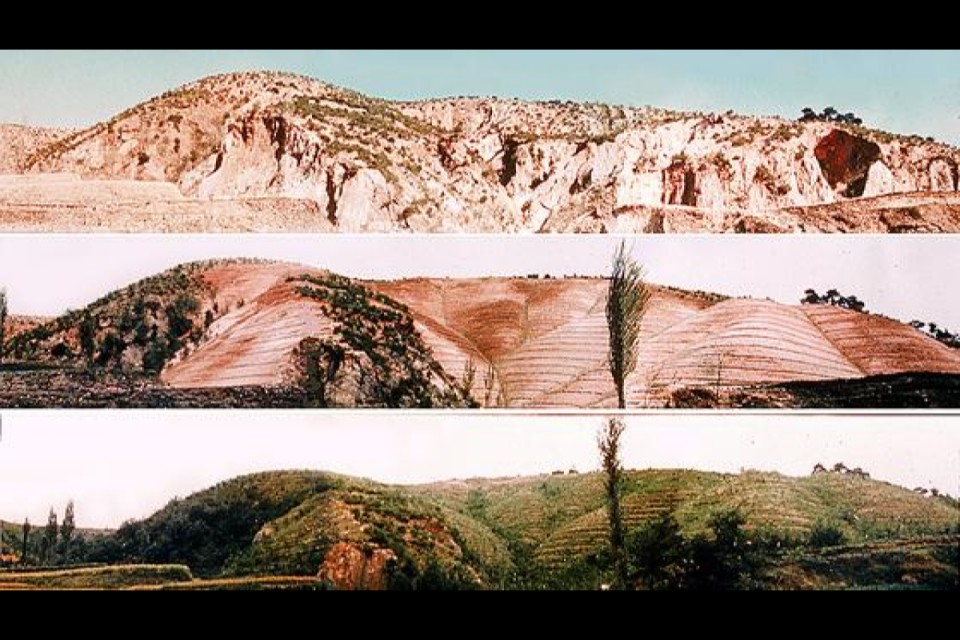
In South Korea, mountains are close to the city. But the forests beside hiking trails are not a landscape that has always been taken for granted. The country’s mountains once lost their trees, and people had to give the forests time to grow back.
Mountains Beside the City
When traveling through South Korea, you often see cities and mountains pressed close together. Mountain ridges rise behind tall apartment towers and office buildings, and sometimes the entrance to a hiking trail is only a short walk from a subway station. On weekend mornings, buses and subway cars fill with people in hiking clothes.
For people in South Korea, mountains are not only places in nature that require a long trip to reach. They are nearby places to exercise, paths for a walk, and familiar spaces for spending the weekend. Mountains close to cities, such as Bukhansan, Gwanaksan, and Inwangsan in Seoul, are especially well loved.
It is easy for someone seeing South Korea’s mountains for the first time to think:
“South Korea must have always been a forested country.”
That is true, but it is not the whole truth. South Korea has many mountains, yet the green forests we see today were not always there. Only a few decades ago, many of the country’s mountains were nearly treeless and barren.
A barren mountain is one with almost no trees and exposed soil. From a distance, it looks more brown than green. The forest paths hikers walk today run through a landscape that nearly disappeared before growing back.
Mountains That Lost Their Trees
There was no single reason South Korea’s mountains were damaged. For generations, people cut trees in the mountains and used them as fuel. This fuel included wood, grass, and other plant material burned for heat. It was needed to cook rice, warm rooms, and survive cold winters.
Ondol (온돌), Korea’s traditional underfloor heating system, also required a great deal of fuel. A fire was lit in a hearth, and heat passed beneath the floor to warm the room above. Wood was not simply part of nature; it was essential energy for daily life.
Forests were also badly damaged during the Japanese colonial period, when Korea was under Japanese rule from 1910 to 1945. Many trees were used for timber and wartime supplies. After liberation, the country was in turmoil, and the Korean War soon followed. The war lasted from 1950 to 1953 and left deep scars across mountains and villages.
Even after the war ended, the mountains could not simply rest. People were poor, and winters were cold. It was not simply that people did not understand the need to protect forests. For many, the immediate need to cook food and heat their homes came first.
Even if trees were planted, a forest could not grow if people had to cut them down again. South Korea’s forest recovery was not simply an environmental campaign. It also required changes in how people lived.
Why Rain Alone Could Not Bring the Forest Back
South Korea is not an especially dry country. It has a summer monsoon, and typhoons sometimes arrive. On the surface, it may seem like an easy place for trees to grow.
The problem is not only how much rain falls. When and how it falls matter too.
In some parts of Europe and humid regions of Japan, rain falls relatively often across several seasons. South Korea also gets plenty of rain, but much of it arrives in summer. Spring and winter, by contrast, are relatively dry. That is a difficult pattern for young trees just beginning to take root.
When heavy summer rain falls on a treeless mountain, there are no roots to hold the soil in place. The water carries the soil downhill. Once soil disappears from a mountain, it becomes even harder for the next generation of trees to grow.
Without trees, the soil washed away; without soil, trees struggled to return. Postwar South Korea’s mountains were caught in this vicious cycle.
The First Change That Saved the Forest Began in the Kitchen
To restore the forests, South Korea first had to solve its fuel problem. If people still had to cut wood from the mountains, no matter how many seedlings were planted, the forests would struggle to survive.
The government first tried to reduce the use of wood fuel in cities. It restricted firewood from entering urban areas and encouraged people to use anthracite, especially yeontan (연탄), round briquettes made from compressed coal powder. Yeontan may seem like a relic today, but at the time it played a major role in protecting forests.
As yeontan became widely used, urban households depended less on wood cut from the mountains. Young trees gained time to grow instead of disappearing again as fuel.
Change came more slowly in rural areas. In many places, yeontan was not as easy to obtain as it was in cities. Plans were therefore made to create fuelwood plantations in the countryside. These were stands of trees planted specifically to provide wood for fuel.
From today’s perspective, this may sound strange. It can seem as though people were planting more trees only to burn them in order to protect forests. At the time, however, it was a practical choice. People who needed fuel immediately could not simply be told to take nothing from the mountains.
The lesson of this period is clear. Protecting forests does not happen only in the mountains. Forests could begin to recover only when people’s kitchens and rooms changed too.
The Scientist Who Searched for Trees Suited to Korean Soil
As the fuel problem gradually eased, the next question came into sharper focus.
“What kind of trees should we plant?”
Not all trees are the same. Some grow quickly but are weak. Some live a long time but grow slowly. Some thrive in rich soil, while others can endure poor ground.
South Korea’s postwar mountains did not offer good soil. The earth was fragile, the mountains were dry, and summer rains washed the soil away. Planting just any tree would not necessarily create a forest.
That question brought Dr. Hyun Shin-kyu to the center of the story. Hyun was a major figure in South Korean forest tree breeding. The term may sound technical, but it simply means researching trees that grow better, resist disease, and endure difficult environments. Just as agriculture develops better varieties of rice or fruit, forestry also needs research to find and raise better trees.
Dr. Hyun crossed pitch pine with loblolly pine to develop the rigitaeda pine. Crossbreeding is a research method used to combine the strengths of different trees, such as the hardiness of one and the rapid growth of another.
He is also well known for his research on the Eunsuwon poplar. The tree drew attention for its fast growth and ability to survive in relatively poor soil. It was later called the Hyunsasi poplar after his family name.
Of course, these few kinds of trees did not create all of South Korea’s forests. Forest recovery was the result of many more people, policies, and tree species working together. Even so, Dr. Hyun’s story reveals an important truth.
Restoring a forest is not only about planting large numbers of trees. It is also about finding trees that can survive on the land.
Early reforestation efforts used many black locusts, pitch pines, poplars, and alders. These trees grew quickly, endured poor soil, or helped hold the ground in place with their roots. By today’s standards, they may not have produced an ideal forest. At the time, however, the urgent task was to cover bare mountains with trees and keep the soil from washing away.
In postwar South Korea, a good tree was first of all one that survived.
The Country and Its Villages Moved Together
Beginning in the 1960s, laws and institutions were established one by one to protect and restore forests. The Korea Forest Service was created, and erosion-control work continued to repair damaged mountainsides.
Erosion-control work prevents soil and rock from washing down mountain slopes and stabilizes damaged land. Often, the soil had to be secured before trees could be planted. Workers stacked stones, directed water channels, and planted grass and trees to keep the ground from collapsing further.
The international community also helped. United Nations–affiliated organizations supported South Korea’s forest recovery through forest surveys, erosion-control projects, and food aid. Still, it would be difficult to explain the recovery through outside assistance alone. Change became possible because the fuel transition, public administration, science, and village participation moved together.
The biggest turning point was the First Ten-Year Forest Rehabilitation Plan, launched in 1973. The Korean phrase chisan nokhwa (치산녹화) refers to stabilizing mountain land and restoring its forest cover.
The Park Chung Hee government pushed the plan forward with strong administrative authority. Unauthorized entry into mountain areas and tree cutting were strictly controlled. Nationwide, tree planting and forest protection became state priorities.
From today’s perspective, this approach may feel uncomfortable. In the 1970s, the state exercised far more power in South Korea than it does today. That is why the country’s reforestation story cannot be told as a simple success story. Even so, it is difficult to deny that strong government enforcement had a real effect on forest protection.
The government set a goal of planting one million hectares over ten years. A hectare is a unit of area, and one hectare is slightly larger than a soccer field. By 1978, 1.08 million hectares had been reforested, surpassing the plan’s original goal.
Not everything was perfect. Some projects fell short of their targets, and not every planted tree grew into a healthy forest. Even so, South Korea’s mountains began to change visibly after this period.
Villagers also had a hand in that change. The government could not produce all the seedlings it needed on its own. A seedling is a young tree. Villagers raised seedlings, planted them in the mountains, and helped the young trees take root.
Forests do not grow inside government documents alone. They require the accumulated time of people who dig the soil, carry seedlings, cut back weeds, and protect the mountains. South Korea’s forest recovery contains the labor of countless people whose names were never recorded.
A Memory That Lives On in Korean Arbor Day
South Korea has a day called Sikmogil (식목일), or Korean Arbor Day. Its name literally means a day for planting trees. It falls on April 5.
Early April is when spring begins in earnest in South Korea. The weather grows warmer, and the ground slowly loses the chill of winter. It has therefore long seemed like a fitting time to plant trees.
Sikmogil was once a public holiday. Schools and workplaces sometimes held tree-planting events. It is no longer a public holiday, but many people in South Korea still know its name. Some remember planting small seedlings as children.
For international readers, Sikmogil offers a small cultural clue. Tree planting in South Korea was not simply an environmental campaign. It is also connected to the memory of having to restore the country’s barren postwar mountains.
Questions After the Mountains Turned Green
South Korea’s forest recovery is often presented around the world as a notable case. That a country left with many barren mountains after war and poverty managed to make them green again in a relatively short time is certainly remarkable.
But the story does not end there. Making mountains green and keeping forests healthy for the long term are not the same thing.
In the past, the urgent task was to cover treeless mountains quickly. Fast-growing species that could survive poor soil were widely used. Over time, other problems came into view. Forests dominated by a single species can be more vulnerable to pests and disease. They may also suffer greater damage when wildfire strikes.
Today, South Korea’s forests face new challenges: climate change, wildfires, and pests and diseases. Pine wilt disease, which causes pine trees to wither and die, is a major concern. Forest policy is therefore moving beyond simply planting as many trees as possible.
There is also a shift toward expanding mixed forests of conifers and broadleaf trees rather than forests dominated by pines. Conifers often have needle-shaped leaves, as pines do, while broadleaf trees have wider leaves. A forest with many kinds of trees can be more resilient.
The question in the past was, “How can we make barren mountains green?” Today’s question is slightly different.
“What kind of forest can survive over the long term?”
This question also connects to the one Dr. Hyun asked. A forest is not finished once it has been planted. As times change, the way we look at forests must change too.
What You May See on Your Next Hike
When you climb a mountain in South Korea, at first you may see only trees, rocks, and soil. Birds call, hikers pass by, and the city spreads out below the summit. The scene feels so natural that it is easy to imagine it has always been there.
But a long history is hidden in those woods. There were mountains that lost their trees after the war. There were people who had to cut wood from the hills to survive the winter. Yeontan arrived, laws and administrative systems moved into place, and villagers raised seedlings. Scientists such as Dr. Hyun searched for trees that could survive on Korean soil.
Walking in South Korea’s mountains may be more than simply going on a hike. It is also walking across a restored landscape. It is a path by which nature returned, but also one that people spent years protecting and helping along.
The next time you climb a mountain in South Korea, you might pause to look at a tree beside the trail. It is not just another tree on a mountainside. It may be evidence of a forest that nearly disappeared and grew back.
- Park Hanbin