Why Does Korea Still Talk About Infinite Challenge?
The Laughter and Memories Left by Korea’s Saturday Evening Variety Show
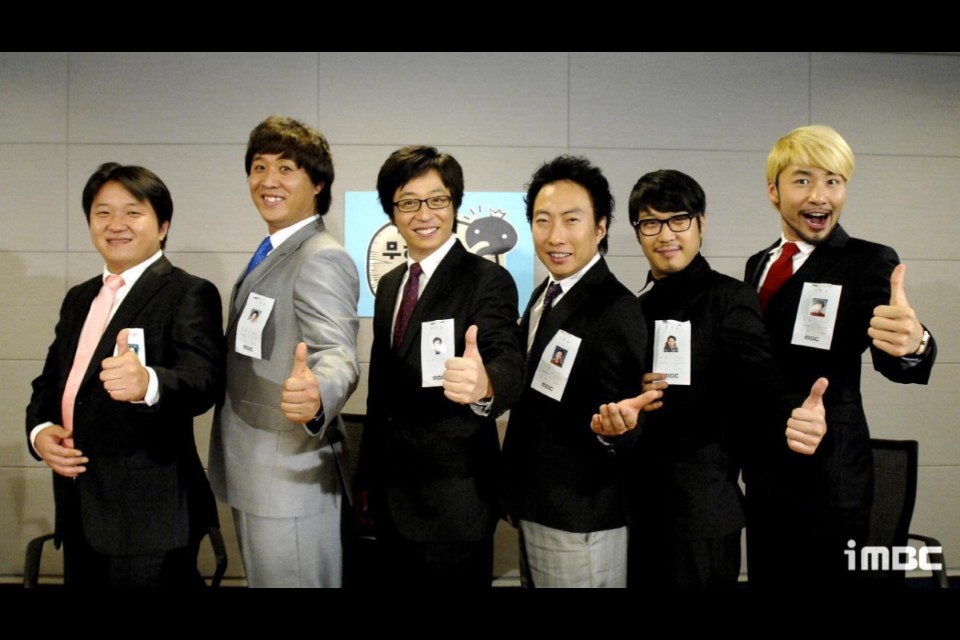
There was a time in Korea when people counted the weeks by episodes of Infinite Challenge. Soldiers would say they had only a few more episodes of Mudo left before discharge, and students counted the Saturdays before the college entrance exam. Why does this variety show, which ended in 2018, still come up so often in Korean popular culture?
When Saturday Came, So Did Mudo
It is rare for a variety show to serve as a kind of calendar. For a time, Infinite Challenge was one of those rare shows. When Saturday evening arrived, people would say, “It’s Mudo day.” Here, Mudo (무도) is the shortened Korean nickname for Infinite Challenge.
People serving in the military would say, “Only a few more episodes of Mudo until discharge.” Discharge means completing one’s military service and leaving the armed forces. Students preparing for the Suneung (수능) did something similar, counting the Saturdays left by saying, “Only a few more episodes of Mudo before the Suneung.” The Suneung is Korea’s major college entrance exam.
It was never an officially coined catchphrase. Rather, it showed just how deeply Infinite Challenge had entered the rhythms of everyday life. For some people, the show marked the passing of another week. It was a standing appointment that returned every Saturday evening.
Why the Label “National Variety Show” Fit So Well
In Korea, an exceptionally famous variety show loved across generations is sometimes called a “national variety show.” The phrase does not mean that every person in the country literally watched it. It is closer to saying that a great many people knew the show and could talk about it together.
The description suited Infinite Challenge remarkably well. It ranked first several times in Gallup Korea’s survey of Koreans’ favorite television programs, returning to the top once more in March 2018, shortly before its finale. The television industry also held it in high regard. In 2015, it received the Grand Prize at the 42nd Korea Broadcasting Awards, the first variety show to win the award’s top honor in 16 years.
The show did not begin on such a grand scale. Infinite Challenge started in 2005 as an earlier segment called Mumohan Dojeon, roughly “Reckless Challenge.” True to its name, the early program found comedy in throwing its cast into absurd challenges. They played tug-of-war against a cow and raced against a subway train. Looking back, it was a somewhat loose and rough-edged beginning.
That roughness eventually became part of the show’s identity. This was not a show about highly capable people pulling off impressive feats, but about imperfect people jumping in anyway and often failing. That was where the comedy of Infinite Challenge began.
The Show Was Never Only About Yoo Jae-suk
Even people unfamiliar with Infinite Challenge may recognize the name Yoo Jae-suk. For many years, he has been one of the defining hosts of Korean variety television. Park Myung-soo, Jung Jun-ha, Jung Hyung-don, Noh Hong-chul, and Haha may also be familiar faces to anyone who has watched even a little Korean variety programming.
The strength of Infinite Challenge came less from individual comic skills than from the relationships among its cast. Yoo Jae-suk held the center as host, while Park Myung-soo shook things up with his grumbling. Noh Hong-chul drove scenes forward with overflowing energy, and Jung Jun-ha created big laughs even while being teased. Jung Hyung-don and Haha each added their own voice and role to the team’s rhythm.
The cast members were more than presenters. Like old friends, they knew one another’s weaknesses and ways of speaking, and they turned that familiarity into comedy. Viewers saw a new theme each week, but what ultimately brought them back was the familiar sight of the members sparring with one another.
Infinite Challenge was not a show carried by a single star. Its power came from relationships built over many years.
When Reckless Challenges Became the Format
MBC described Infinite Challenge as “Korea’s first reality-variety show.” Reality-variety is a format that finds entertainment in the cast’s genuine reactions, relationships, failures, and unexpected moments. It does not mean there is no script at all. Rather, much of the comedy comes from how people respond within a set situation.
The show changed form from week to week. In one episode, the members made music; in another, they became office workers. Some weeks brought sports challenges, while others featured elaborate chase games. There were specials built around election-style voting, calendar-making projects, and trips abroad.
Infinite Challenge could move so freely between formats because its core was not a fixed set of rules, but the cast’s relationships and their willingness to take on challenges. More than the subject itself, viewers wondered, “What will happen when these members try it?”
That flexibility helped the show endure. When one trend faded, it could move into another format. Along the way, it also opened new paths for variety television to meet music, office life, sports, and internet culture.
When a Variety Show Became a Music Festival
One of Infinite Challenge’s biggest legacies in Korean popular culture was the Infinite Challenge Music Festival.
A gayoje (가요제) is an event centered on creating songs and performing them onstage. At the Infinite Challenge Music Festival, television entertainers teamed up with professional singers to make music. At first, the results could seem like little more than “songs made for a variety show.” But the festival’s impact did not stay within the program. The songs from the broadcast were officially released, and people listened, sang along, and remembered them for years.
The 2015 Yeongdong Expressway Music Festival showed the program’s influence especially clearly. Tens of thousands of people gathered inside and around the venue, and what had begun as an event within a television show was received like a major music festival in its own right.
The appeal of the Infinite Challenge Music Festival was not limited to the finished songs. The process was often even more entertaining. The first awkward meetings between entertainers and singers, the effort to reconcile their ideas, the rehearsals, the occasional friction, and finally the performance all became one unfolding story.
It was the show’s own way of doing things. The twists and setbacks on the road to the stage were just as entertaining as the finished performance.
When Office Life Became Entertainment
Infinite Challenge also had a popular special called Muhan Company. It was a situational comedy in which the members appeared as office workers. Each took on a corporate rank, with Yoo Jae-suk as a department head, Park Myung-soo as a deputy general manager, and Jung Jun-ha as a manager.
Corporate rank plays a visible role in many Korean workplaces. Terms such as sawon (사원), daeri (대리), gwajang (과장), chajang (차장), and bujang (부장) indicate a person’s position within a company. They are words that come up often in Korean dramas and variety shows.
Muhan Company turned this office culture into comedy. Its scenes involved meetings, reports, flattery, company dinners, employees trying to read the boss’s mood, and the frustrations of junior staff. At times, it also dealt with heavier subjects such as layoffs, when employees lose their jobs because of a company’s circumstances.
Of course, Muhan Company was not a documentary that reproduced Korean office life exactly. Even so, it contained moments that many office workers could recognize: the awkwardness of a meeting room, the way the atmosphere shifts after a single comment from the boss, and the careful glances people exchange when something goes wrong.
In this sense, Muhan Company became more than a simple parody. It established itself as a special that turned one facet of Korean workplace culture into comedy. Its scenes were funny but slightly bitter, exaggerated yet strangely true to life.
Sports Proved the Meaning of “Challenge”
The most prominent word in the title Infinite Challenge is, of course, “challenge.” The sports specials brought that word to life more clearly than anything else.
The members took on bobsled, rowing, professional wrestling, dancesport, and other disciplines. Some were not especially familiar to the general public at the time. As a result, the sports specials became more than a source of laughs: they also gave viewers a chance to discover unfamiliar sports and appreciate the effort required of their athletes.
The fun did not come from the members excelling at these sports. It came from watching them struggle as beginners. Their form was awkward, their stamina was limited, and they barely knew the rules. As the training continued, however, the mood changed. What had begun as comedy gradually became a serious challenge.
The rowing and bobsled specials, in particular, made the limits of the body impossible to miss. The members grew exhausted, became tense, and clashed with one another. In the process, the effort demanded by the sports—and by the athletes who practiced them—came into view behind the laughter.
“That sport is much harder than it looks.”
The sports specials help explain why Infinite Challenge was loved for so long. The point was not to win flawlessly. It was to leap together into something they had never tried before, creating both laughter and genuine emotion along the way.
Even International Stars Joined the Games on Mudo
A number of internationally known figures also appeared on Infinite Challenge, including Jack Black, Thierry Henry, Stephen Curry, and Seth Curry.
What made these appearances interesting was not simply that famous people had come onto Korean television. International stars who visited Infinite Challenge usually played games alongside the members. Jack Black eagerly joined Korean song quizzes and physical games. Thierry Henry showed an easygoing, playful side beyond his image as a football star. Stephen and Seth Curry took part in a basketball contest with the cast.
Television programs often handle world-famous guests with great care. Infinite Challenge respected its guests as well, but it did not simply seat them for an interview. It invited them into Mudo-style games where they ran, guessed, failed, and laughed together.
These moments showed the stature Infinite Challenge enjoyed as one of Korea’s leading variety shows. When international stars met Korean audiences, the program was one of the clearest points of connection between them.
Finding New Life in Jjal and Clips
Infinite Challenge ended in 2018. But it did not disappear.
After the finale, the show began circulating again through jjal and clips. It lived on not as a full-length broadcast, but as a few minutes of YouTube video, a single image, or a line repeated in the comments. The Korean word jjal (짤) refers to an image or short video snippet frequently shared online. Infinite Challenge left behind countless such images and clips.
Out of this came a familiar saying:
“Mudo has a scene for everything.”
Whenever a news story breaks or a new trend emerges, people search old Infinite Challenge scenes for something similar. When the match is especially uncanny, they joke that the show predicted the future. Of course, it did not really predict anything. The joke reflects how many different situations the program covered and how long its scenes have remained in people’s memories.
Infinite Challenge grew up in an era when audiences gathered around scheduled television broadcasts. After it ended, it found new life in the age of clips and memes. A show once watched together on Saturday evenings became material people could pull out whenever they needed a joke.
Why Korea Still Talks About Infinite Challenge
There is no need to call Infinite Challenge a perfect program. It ran for many years, and some scenes may feel dated or unfamiliar today. Even so, its place in Korean popular culture should not be taken lightly.
Infinite Challenge made people look forward to Saturday evenings. It turned music made for a variety show into festivals that reached beyond television, transformed office life into situational comedy, and made unfamiliar sports into stories of laughter and emotion. International stars entered its distinctive games, and after the finale, the show kept being replayed through jjal and clips.
It is now difficult to describe Infinite Challenge as merely “a program that used to be popular.” It captures the ways people in Korea watched television in the 2000s and 2010s, grew attached to entertainers, waited for Saturday, and brought old scenes back into circulation online.
That is why people in Korea still talk about Infinite Challenge. For some, it is a Saturday from childhood. For others, it is the remaining weekends they counted during military service, or the time left before an important exam. For still others, it is an old joke that continues to return in comments and jjal today.
Infinite Challenge has ended. But it still lives on, in small ways, in how people in Korea laugh, remember, and joke with one another.
- Park Hanbin